
ScanMedETC Meeting in Brussels
The European Coordinator for the ETC ScanMed, Pat Cox, welcomed about 200 participants. He opened the meeting stressing that we should avoid fatalism despite a multitude of crisis resulting from the COVID-19 pandemic, the Russian war in the Ukraine to the aggression in the Middle East, which are all impacting our societies and also the TEN-T development.
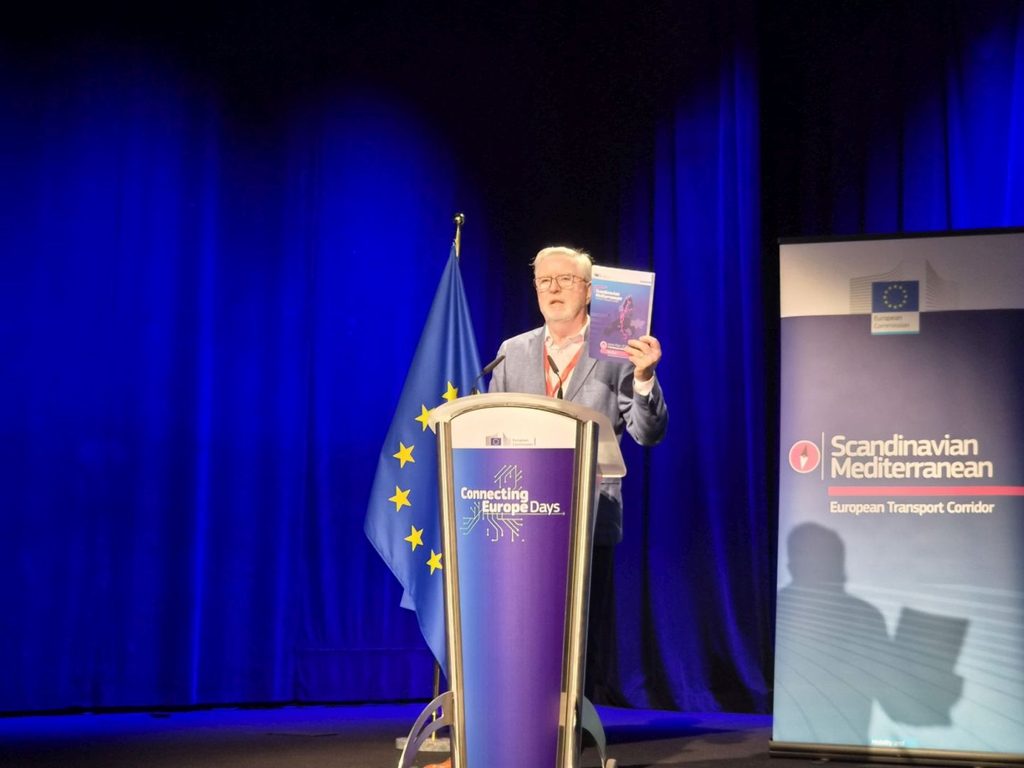
He explained that the CEF-2 budget was frontloaded and to a large extent assigned to projects of common interest already. The Multiannual Financial Framework (MFF) 2028-2034 proposed by the Commission foresees a CEF-3 budget of about € 51.5 bn of which € 17.6 bn for Military Mobility. It is currently debated between the Council and the European Parliament and one cannot be sure which budgets will remain at the end.
The Coordinator recalled that over the last year, the team of consultants, the Advisor and the Corridor Forum members, in particular the representatives of the Member States have provided their input to the first Workplan for the ScanMed corridor under the 2024 TEN-T Regulation which is at the same time the last before the 2030 TEN-T deadline.
The about 245 ongoing or planned projects along the ScanMed corridor are mostly funded from state budgets and focused on rail. This shows the need for an increased CEF budget and calls for the involvement of private and blended finance. At the same time it shows the manifold business opportunities on the ScanMed corridor for construction companies and suppliers of infrastructure equipment.
He further explained that the workplan analysis reveals that several projects are facing delays in the planning and permitting phase, which are partly caused by the Russian war against Ukraine, the trade and tax regime of the Trump administration and the disrupted supply chains. As one of the consequences, the two flagship projects on the corridor – the Fehmarn Belt Fixed Link and the Brenner Base Tunnel – both including their access lines will be completed only after 2030. Objections raised on the projects in Germany and the potential court cases will further delay the programme.
Lastly the Coordinator highlighted that both flagship projects as well as the infrastructures in the high north are the subject of dedicated stakeholder Platforms which are looking beyond the mere implementation of infrastructure aiming to also address operational issues and other wider topics important for cross-border transport.
Presentation of the new ScanMed Workplan
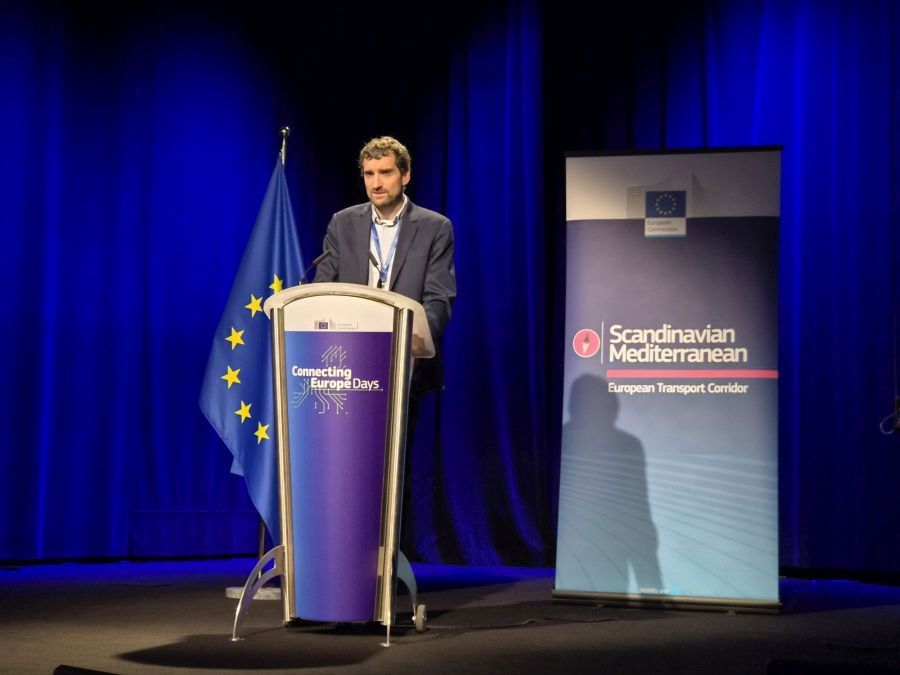
Martin Zeitler, Advisor to the European Coordinator within DG MOVE, explained the new structure of the Workplan consisting of an analytical and a political section.
It can be downloaded from the Commission website.
The 2024 TEN-T revision delivered some changes to the Corridor’s alignment and affected also the length of road and rail infrastructures and the number of seaports, airports and Rail-Road Terminals as well as Urban Nodes.
About 30 projects were completed along the ScanMed corridor since 2024 and 245 are ongoing or planned with a total official cost of € 190.7bn. Under consideration of their financial sources and using costs estimates where official costs are not known a funding gap of € 29.5bn can be calculated.
Looking more closely at corridor compliance Martin highlighted that although the corridor largely meets the requirements in terms of railway electrification and axle load railway capacity remains an issue in certain corridor sections. Following the Commission Communication on a High-Speed (passenger) Rail Plan for 2040 of December 2025 there is an increased focus on completing the remaining 32% of lines which are not yet providing a maximum passenger train speed of at least 160 km/h. Looking at roads a smaller share of roads does not provide for the required separation of lanes and ‘no crossing at grade’ while larger gaps exists especially with a view to the implementation of safe and secure parking areas.
Finally Martin explained the purpose of the Milestones Plan – a novelty of the present Work Plan. This plan, contains the most important projects along the corridor and – suggests when those KPI relevant projects shall be completed alone or “synchronised” with their connected projects. The plan forms the basis for the Implementing Decisions to be established in the next year.
Contributions from the participating countries
Malta
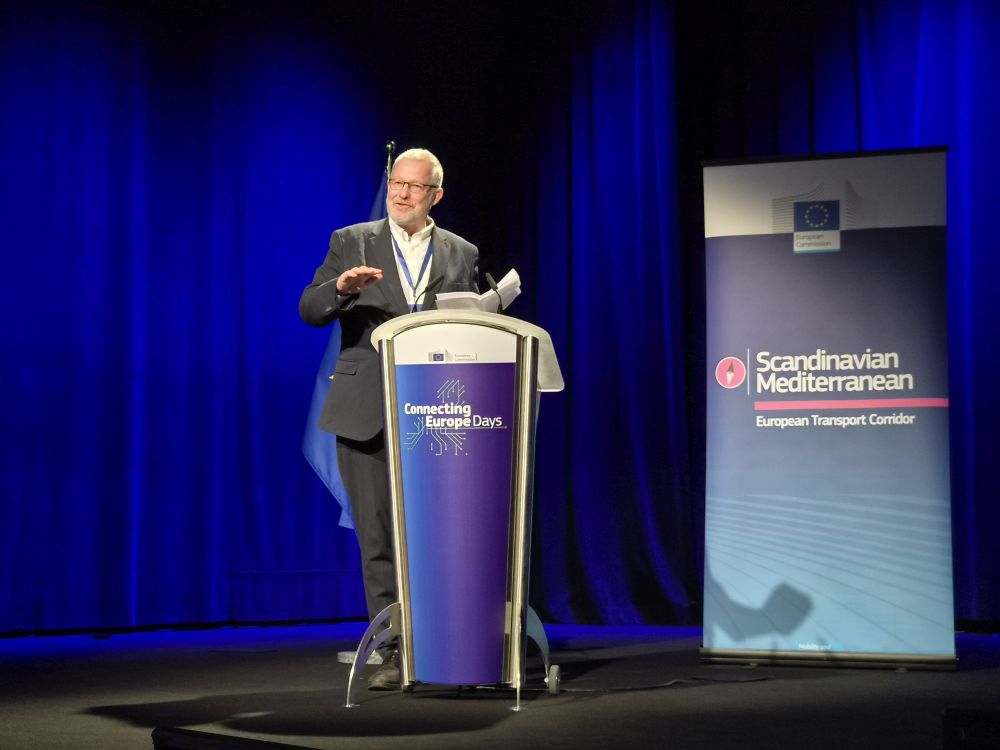
David Sutton, Senior Advisor of Transport Malta, presented that a robust connection to Europe is the lifeline of Malta. The TEN-T infrastructure consists of 19 km of road, two seaports and one (private) airport. Malta is suffering from the red-sea crisis which has rerouted some shipping lines and the competition with non-EU ports in the Mediterranean. Nevertheless, illustrations show the progress made on the roads, ports and with respect to promoting active mobility. However, Malta has requested an exemption from TEN-T requirements related to road infrastructure on parts of its core network due to the space limitations.
Italy
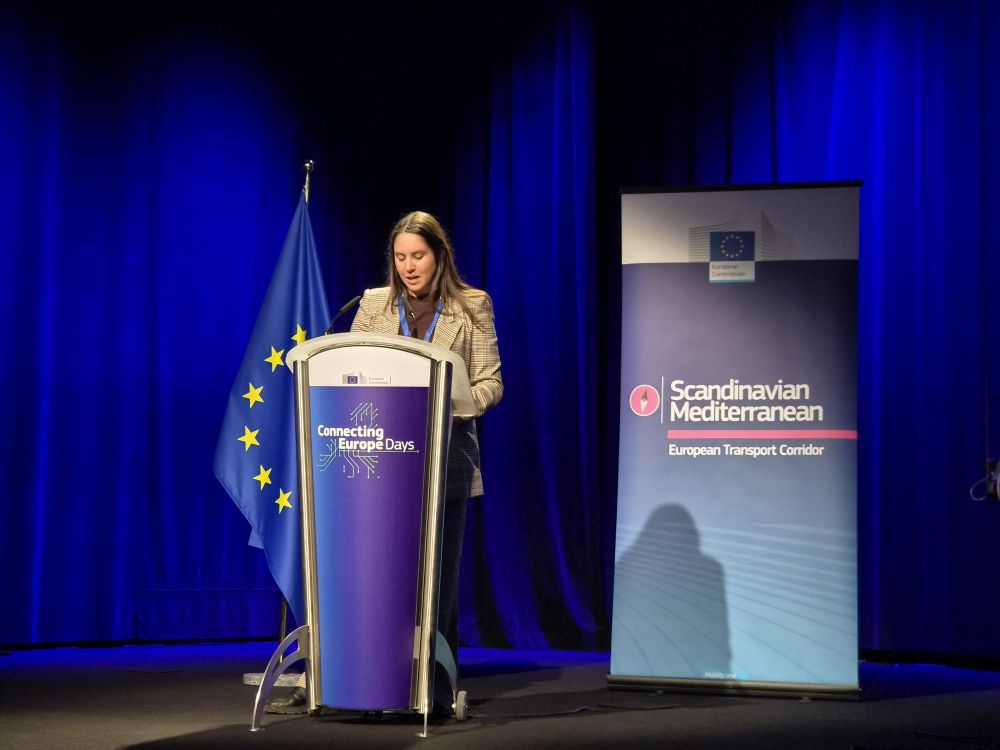
Catalina Mariotti from RAM – Logistica, Infrastrutture e Trasporti s.p.a Italy, presented that Italy undertakes efforts for a timely completion of the TEN-T requirements on their network. It will improve the multimodal connectivity and foster the green and digital transition and deliver not only individual infrastructure projects but a seamless transport system. Financing is a remaining challenge since only the three largest projects are already costing €30bn. Furthermore, timely completion depends in part on efficient permitting procedures. Italy highlighted the added value of cooperation among the Member States, the Commission and the European Coordinator, stressing the importance of an enhanced coordination to facilitate and accelerate these procedures.
Austria
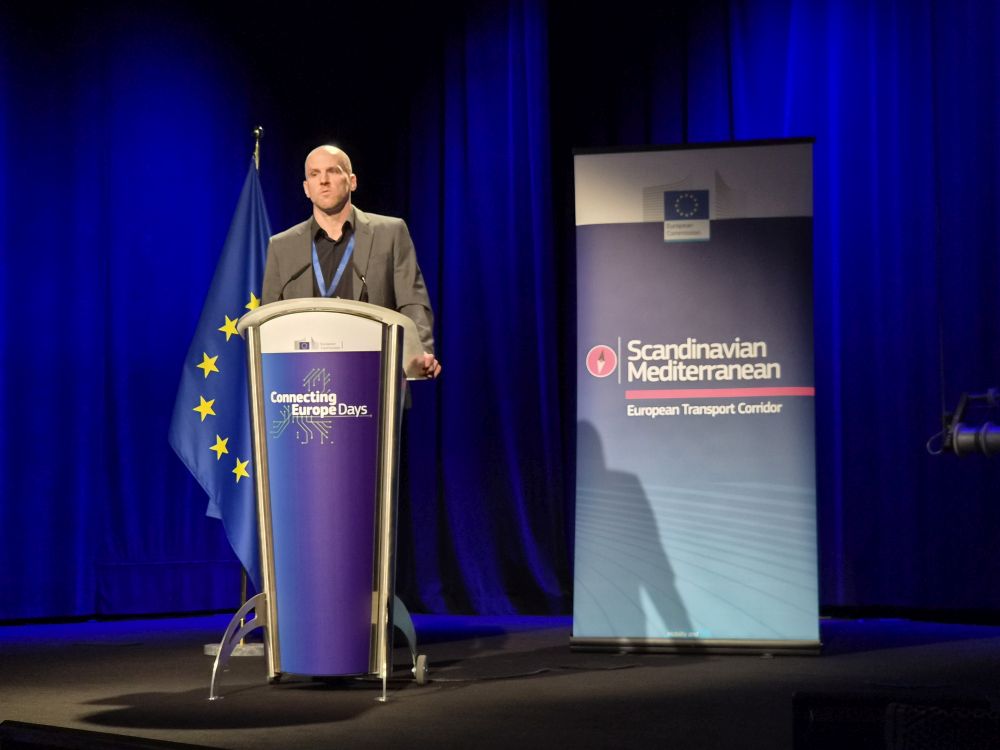
Sebastian Steinbrecher, Austrian Ministry of Innovation, Mobility and Infrastructure, highlighted the progress made on excavating the Brenner Base Tunnel, and that now technical issues for the railway infrastructure are to be developed and decided upon. He highlighted that the access lines are needed in the 2030 decade and that he hopes that Germany will find a solution to make that possible. He announced that a transport infrastructure alliance for better coordination of rail and road works has been agreed upon between Switzerland, Austria, Italy and Germany.
Germany
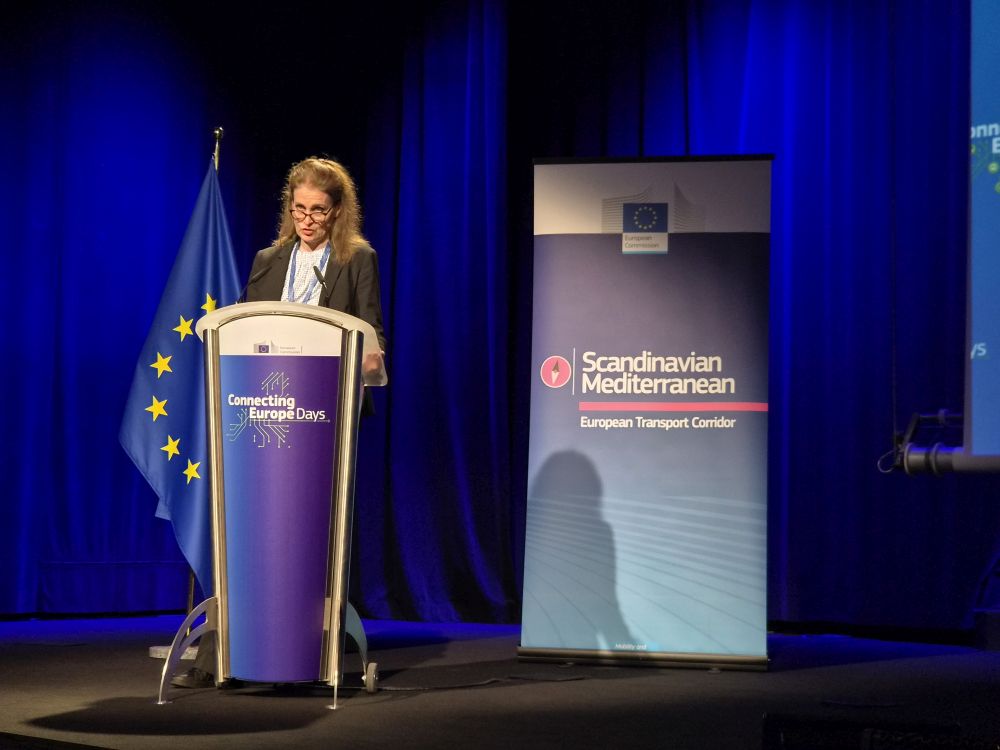
Stefanie Schröder, Head of Unit in the German Federal Ministry of Transport, reported that Germany has formally agreed to all seven Workplans (five corridors which are linked to Germany and two horizontal priorities) and congratulates Denmark on the recent successful immersion of the fourth tunnel element, thus for the progress made on implementing the part of the Fehmarn Belt Fixed Link in the sole responsibility of Denmark. All parts of the German hinterland connection are now in the planning approval procedure, and several planning approval decisions have already been made. The Danish and German ministers of transport agreed to discuss the next steps in the commissioning schedule once further elements have been immersed and Femern A/S has gained more experience from the immerse tunnel by the end of 2026. Germany is applying for the reflow call which is backed by Denmark by a letter of support and vice versa.
Denmark
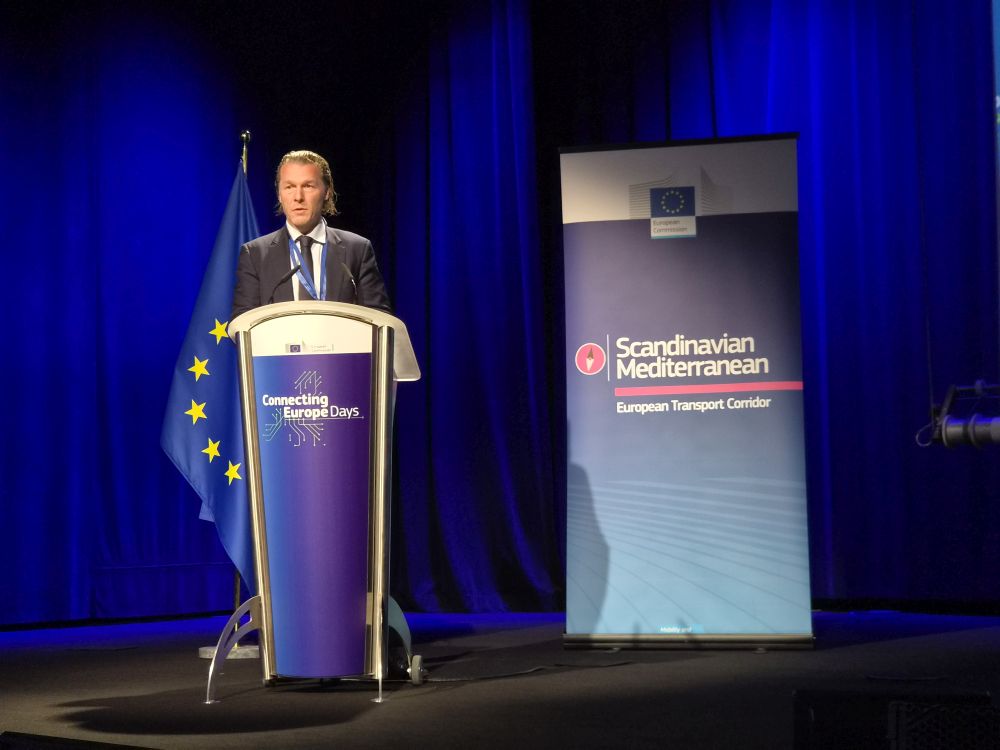
Kristoffer Bang Refberg thanked the European Coordinator for the draft Workplan which is fully endorsed by the Danish government. He highlighted that the Fehmarn Belt Fixed Link is of highest importance and that considerable progress in the construction was made. The Ringstedt – Fehmarn and Størestrom Bridge projects are connected to it while the Kauslunde – Odense project will deliver a 250 km/h rail line on West Funen. No progress was made in North Jutland with respect to the missing electrification and ERTMS supply so that only 82% of the rail infrastructure is compliant and 97% of the road infrastructure. He also noted a lack of Alternative Fuel Infrastructure Compliance within Urban Nodes for Heavy Duty Vehicles and explained that this is partly due to the lack of electric grid capacity. He informed about an ongoing parliamentary debate on the possibilities to apply “overriding public interest” for certain projects fulfilling a dual use purpose or Military Mobility requirement in order to realise them faster.
Finland
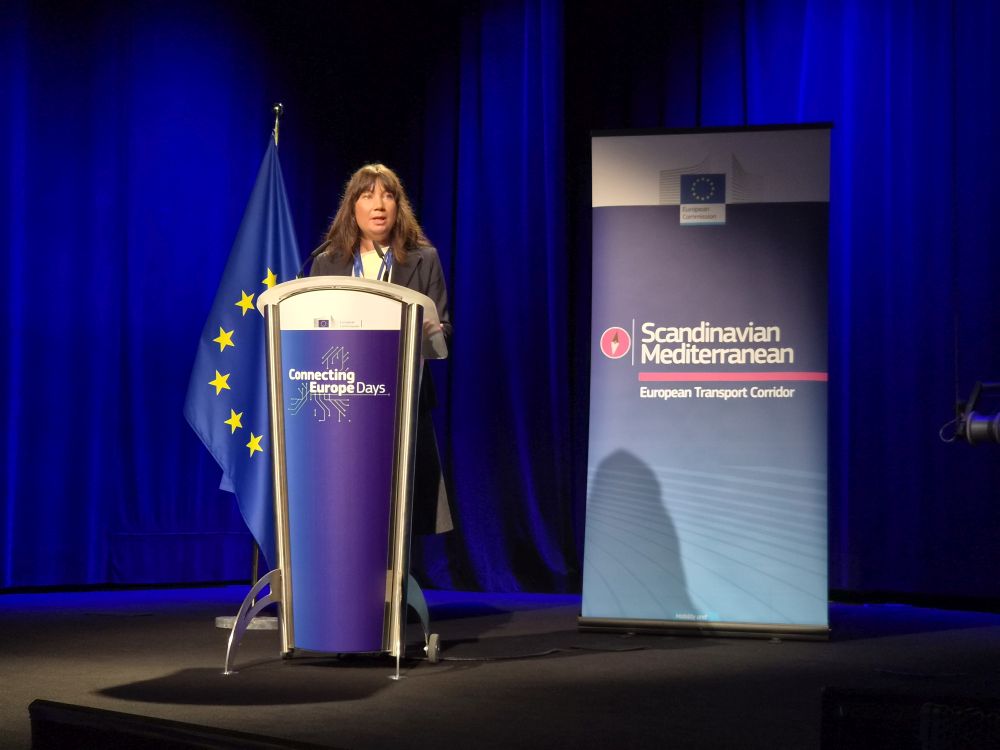
Kaisa Kuukasjärvi, of the Finish Ministry of Transport and Communications, explained that Finland is a front-line country of NATO and that its infrastructure projects are thus are partially driven by Military Mobility considerations. The Rail Nordica project is about to link Sweden and Finland with the European gauge railways. The ScanMed corridor is key for Finland and the cooperation among the Nordic states is even deepened. Nevertheless, also Finland is facing fiscal budget restrictions, while having to integrate Military Mobility and civilian requirements and not forgetting to maintain the existing infrastructure so that timely completion of all projects remains a challenge.
Sweden
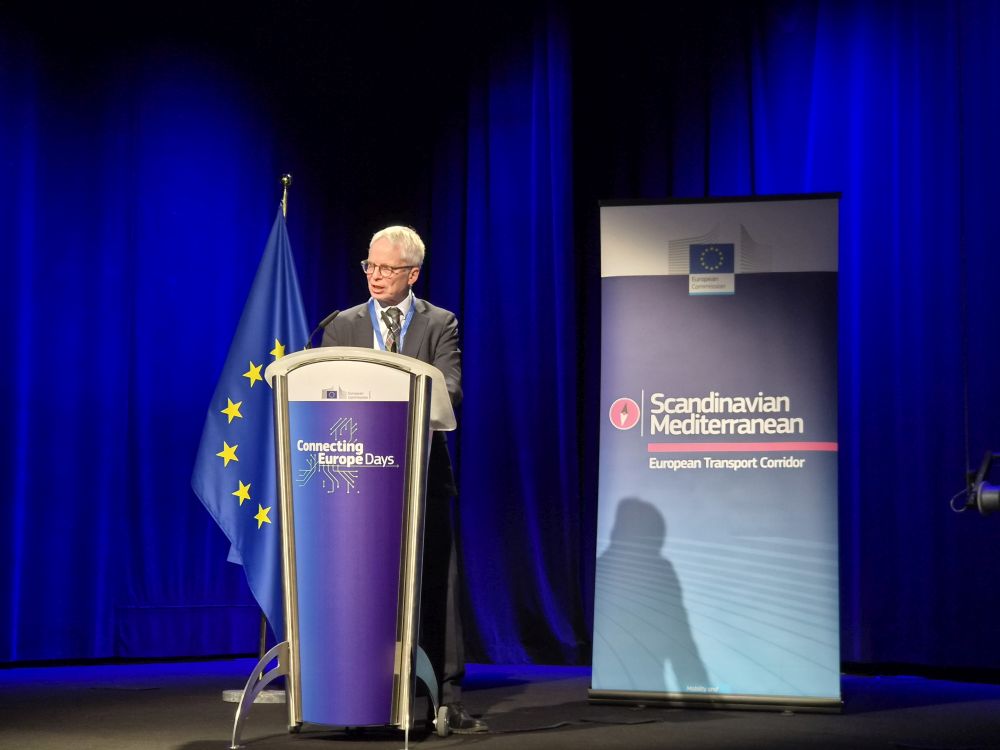
Niklas Lundin, of the Swedish Ministry of Rural Affairs and Infrastructure, reiterated that Sweden has a 12-year-plan for the development of (transport) infrastructure which is revised every four years – the last time in spring 2026. He highlighted several major projects which are also part of the Coordinator’s Workplan. The recent election will bring a new government which may set different key thematic areas.
Norway
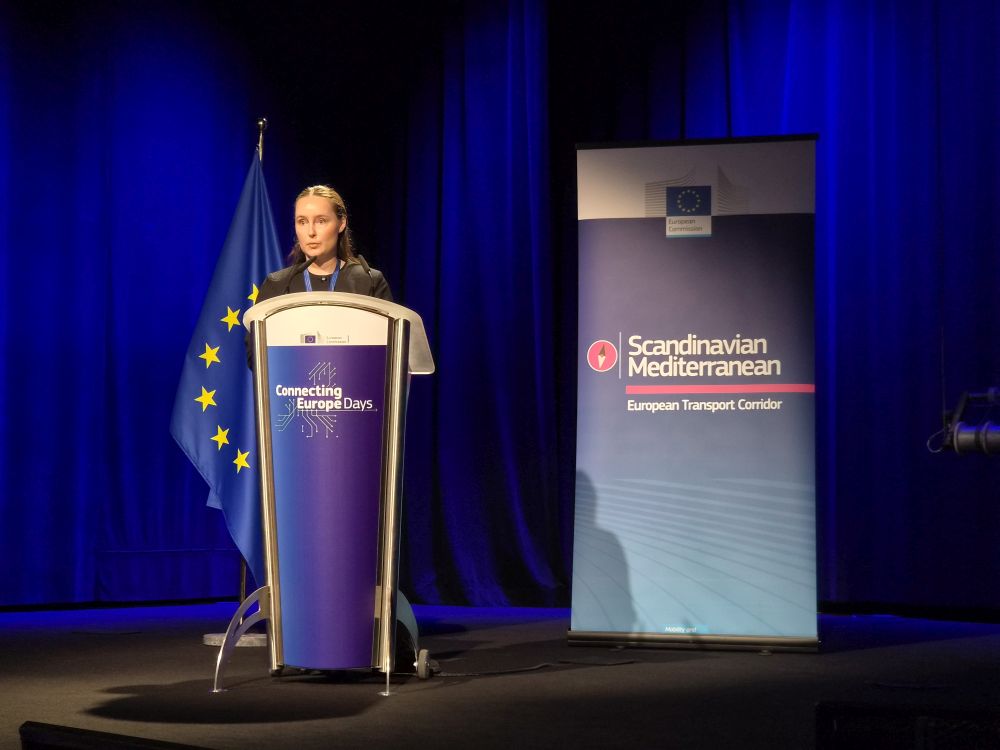
Ingjerd Dahl, Norwegian Ministry of Transport, confirmed that Norway is fully aligned with the TEN-T requirements and the European cooperation. With respect to the size of the country, the climate challenges ahead and an immense maintenance back lock she explains that maintenance and improvement of existing infrastructure is being prioritized, and that some new projects are behind schedule. In addition, she explained that military mobility is an important agenda-setter for the transport policy. She nevertheless highlighted the Ofoten line linking the Port of Narvik with the Norwegian/Swedish border, the E10 road and many bridges requiring an upgrade.
Closing of the meeting
At the end of the presentation the European Coordinator concluded that the infrastructures along the corridor are united in diversity, thanked the Member States for the statements and support and promised to pick-up the idea of “overriding public interest”. He underlines the importance of Germany due to its location in “Mitteleuropa”.
Background
KombiConsult has been actively involved in two of the core network transport corridors since 2014 and supports the Commission in the development of the corridors: In the ScanMed-Corridor (Scandinavian-Mediterranean Corridor) as lead consultant and in the Rhine-Alpine-Corridor as partner. With the entry into force of the new TEN-T Regulation on July 19, 2024, the European Commission has further advanced the expansion of the core network transport corridors. The Rhine-Alpine Corridor meanwhile was merged with the North Sea-Mediterranean Corridor and established the European transport corridor North Sea-Rhine-Mediterranean-Corridor (NSRM).
Find out more about our activities and our contribution to the further development of the European Transport Corridors here.